Robots/Parts/Senses
Head touch sensor
A touch-sensitive patch on top of the robot's head. When someone taps, pats or strokes it, the robot notices and reacts, for example with a small movement. It works like the touch buttons on a phone or a cooker, sensing a finger through the cover without any part moving. It is there to make the robot feel friendly and responsive, rather than to help it work.
- 1 of 15
- robots in the database
- Not named
- made by
- Senses
- brain layer
- Not public
- price
Key numbers
- Touch chip
- Awinic AW93208GQNR, per AgiBot's developer documents
- What it can tell apart
- single, double and triple taps, short and long presses, and slides
- On AgiBot X2
- on top of the head, on the X2 Neo and X2 Ultra
- What the robot does
- AgiBot says it performs a feedback action when its head is touched
Source: AgiBot AimDK_X2 docs, 1.6 AgiBot X2 Sensor Overview (x2-aimdk.agibot.com)
Strengths and trade-offs
Our analysisStrengths
Gives people a simple, natural way to get the robot's attention.
No moving parts, so nothing to wear out.
Tiny, cheap and uses very little power.
Tells different kinds of touch apart, so each can trigger a different reaction.
Trade-offs
Only covers one small patch, so it is not a sense of touch for the whole body.
Mainly for show and interaction, it does not help the robot do work.
Can be set off by accident, for example by a bump or a wet surface.
Why robot makers choose it
Our readThe X2 is sold for shows, schools and greeting visitors, where being pleasant to be around matters. A pat on the head that gets a response makes the robot feel more alive, and a touch chip costs very little to add.
This is our reasoning from the public facts. No maker has confirmed it.
Robots using it
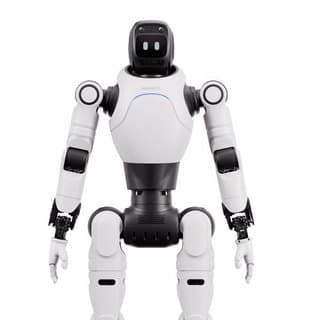
This list covers only the robots researched so far. A robot missing here may still use this part.
Numbers and listed prices on this page come from the sources shown. Anything marked as our analysis, our read or our estimate is our own view and has not been confirmed by any company. Last checked 15 Oct 2026. How we verify