
Robots/Parts/Senses
Single camera
A single camera, where Unitree's dearer versions have two. Unitree lists a monocular camera on the R1 AIR, the cheapest version of the R1, while the R1 and R1 EDU have a two-lens binocular camera. Unitree does not name the camera.
- 1 of 10
- robots in the database
- Not named
- made by
- Senses
- brain layer
- Not public
- price
Key numbers
- Model
- not named by Unitree
- On Unitree R1 AIR
- one camera
- On Unitree R1 and R1 EDU
- a two-lens camera instead
Source: Unitree, R1 product page (unitree.com)
Strengths and trade-offs
Our analysisStrengths
Cheaper and simpler than a two-lens camera.
Less video to process, so the computer works less hard.
Enough to see and recognise things in front of the robot.
Trade-offs
One camera cannot judge distance the way two eyes can. The software has to guess it.
Weaker for picking things up, where exact distance matters.
Poor light makes it much less useful.
Why robot makers choose it
Our readThe R1 AIR is the lowest-priced version of an already cheap humanoid. Dropping to one camera trims cost, and buyers who need proper distance sensing can step up to the versions with two lenses.
This is our reasoning from the public facts. No maker has confirmed it.
Robots using it
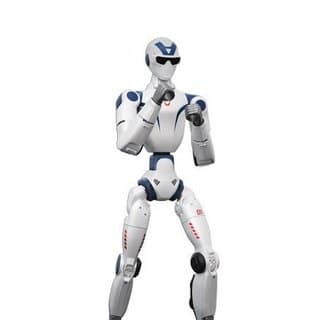
This list covers only the robots researched so far. A robot missing here may still use this part.
Numbers and listed prices on this page come from the sources shown. Anything marked as our analysis, our read or our estimate is our own view and has not been confirmed by any company. Last checked 14 Oct 2026. How we verify