
Robots/Parts/Training
Motion capture
A way of recording how a person moves so a robot can copy it. Markers or sensors track a person's body as they walk, lift or reach, and the recording is turned into movements the robot's own joints can make. It gives the robot a human-like starting point that it then polishes by practice.
- 1 of 10
- robots in the database
- Not named
- made by
- Training
- brain layer
- Not public
- price
Key numbers
- Agility Digit
- taught from demonstrations, including motion capture, teleoperation and simulated examples
- Then refined by
- trial-and-error practice in simulation before going to a customer site
Source: Churchill Capital Corp XI and Agility Robotics, proxy statement and prospectus (SEC Form 424B3) (sec.gov)
Strengths and trade-offs
Our analysisStrengths
Captures natural, human-like movement that is hard to describe in code.
One person's recording can be reused many times.
No robot is needed while recording, so nothing gets broken.
Gives trial-and-error learning a sensible place to start.
Trade-offs
A person's body is not a robot's body, so every recording has to be adapted.
Shows how to move, not how hard to push or grip.
Studio equipment and sessions cost time and money.
The robot still needs plenty of practice before the movement works on its own legs.
Why robot makers choose it
Our readHumanoids are shaped like people so they can work in places built for people. Recording real people doing the job is the most direct way to show such a robot how the movement should look, and practice in simulation then makes it reliable.
This is our reasoning from the public facts. No maker has confirmed it.
Robots using it
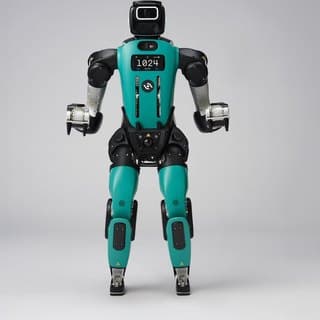
This list covers only the robots researched so far. A robot missing here may still use this part.
Numbers and listed prices on this page come from the sources shown. Anything marked as our analysis, our read or our estimate is our own view and has not been confirmed by any company. Last checked 14 Oct 2026. How we verify