 Teardex
Robots/Parts/AI model
Learned walking controller
The part of Spot's software that keeps it walking and balanced. Boston Dynamics trained it by letting a virtual Spot try and fail millions of times in a simulator, then moved the result onto the real robot.
- 1 of 5
- robots in the database
 Boston Dynamics
- made by
- AI model
- brain layer
- Not public
- price
Key numbers
- Made by
- Boston Dynamics, in-house
- How it learned
- trial and error in simulation
- What it does
- walking and balance
Source: Boston Dynamics blog, Starting on the Right Foot with Reinforcement Learning (bostondynamics.com)
Strengths and trade-offs
Our analysisStrengths
Copes with slippery and uneven ground that hand-written rules struggle with.
Can be improved by more practice in simulation, with no need to rewrite code.
Proven on a robot that has been sold for years.
Trade-offs
A learned controller is harder to inspect than hand-written rules, so it is harder to explain a fall.
It handles walking only. It does not decide what the robot should do.
Only as good as the situations the simulator covered.
Why robot makers choose it
Our readSpot works on building sites and in factories where the floor is never the same twice. Writing a rule for every surface is impossible, but a controller that has practised on millions of them copes with the ones nobody thought of.
This is our reasoning from the public facts. No maker has confirmed it.
Robots using it
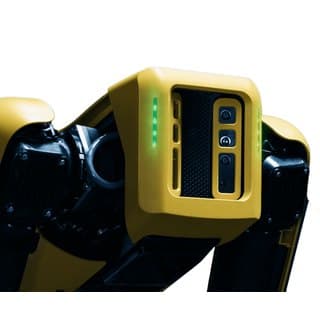
This list covers only the robots researched so far. A robot missing here may still use this part.
Numbers and listed prices on this page come from the sources shown. Anything marked as our analysis, our read or our estimate is our own view and has not been confirmed by any company. Last checked 12 Oct 2026. How we verify