
Robots/Parts/Training
Recorded human movement
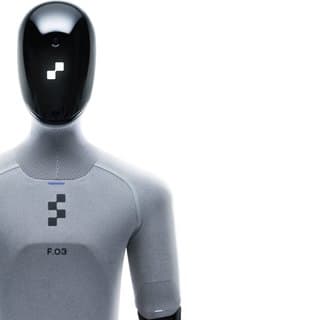
Recordings of how real people move, turned into a form a robot's joints can follow. Figure used a large collection of these to help Helix 02 walk, balance and move its whole body in a natural way.
- 1 of 10
- robots in the database
- Not named
- made by
- Training
- brain layer
- Not public
- price
Key numbers
- Figure Helix 02
- more than 1,000 hours of human motion data
- Prepared by
- mapping each human joint onto the matching robot joint
- Balance layer speed
- the movement layer it feeds runs 1,000 times a second
Source: Figure, Introducing Helix 02: Full-Body Autonomy (figure.ai)
Strengths and trade-offs
Our analysisStrengths
Gives the robot natural, human-looking movement.
Covers a wide range of everyday motions.
Can be gathered without a robot present.
Helps simulation practice start from sensible movements rather than random flailing.
Trade-offs
People and robots have different weights, joints and strength, so the data has to be adapted.
Movement alone says little about the forces involved.
Collecting and cleaning many hours of recordings is costly.
Why robot makers choose it
Our readA humanoid that moves like a person is easier to work beside and better suited to spaces built for people. Learning from many hours of real human movement is a quicker route to that than designing every motion by hand.
This is our reasoning from the public facts. No maker has confirmed it.
Robots using it
This list covers only the robots researched so far. A robot missing here may still use this part.
Numbers and listed prices on this page come from the sources shown. Anything marked as our analysis, our read or our estimate is our own view and has not been confirmed by any company. Last checked 14 Oct 2026. How we verify